
Featured
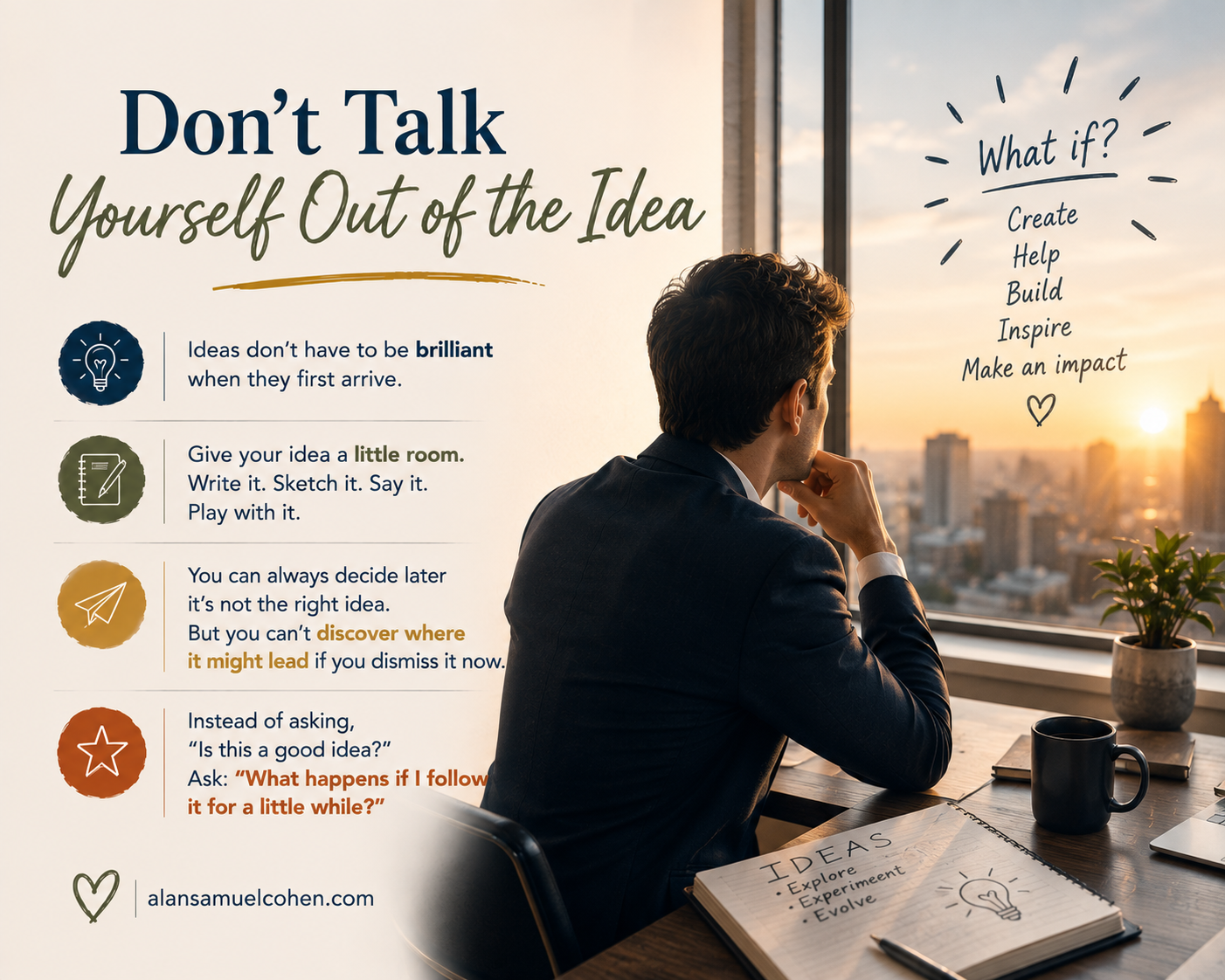











Have you ever had an idea that made you smile for a moment...
And then immediately talked yourself out of it?
"That's probably silly."
"Someone else has already done that."
"I'm not sure anyone would care."
"Maybe it's not worth pursuing."
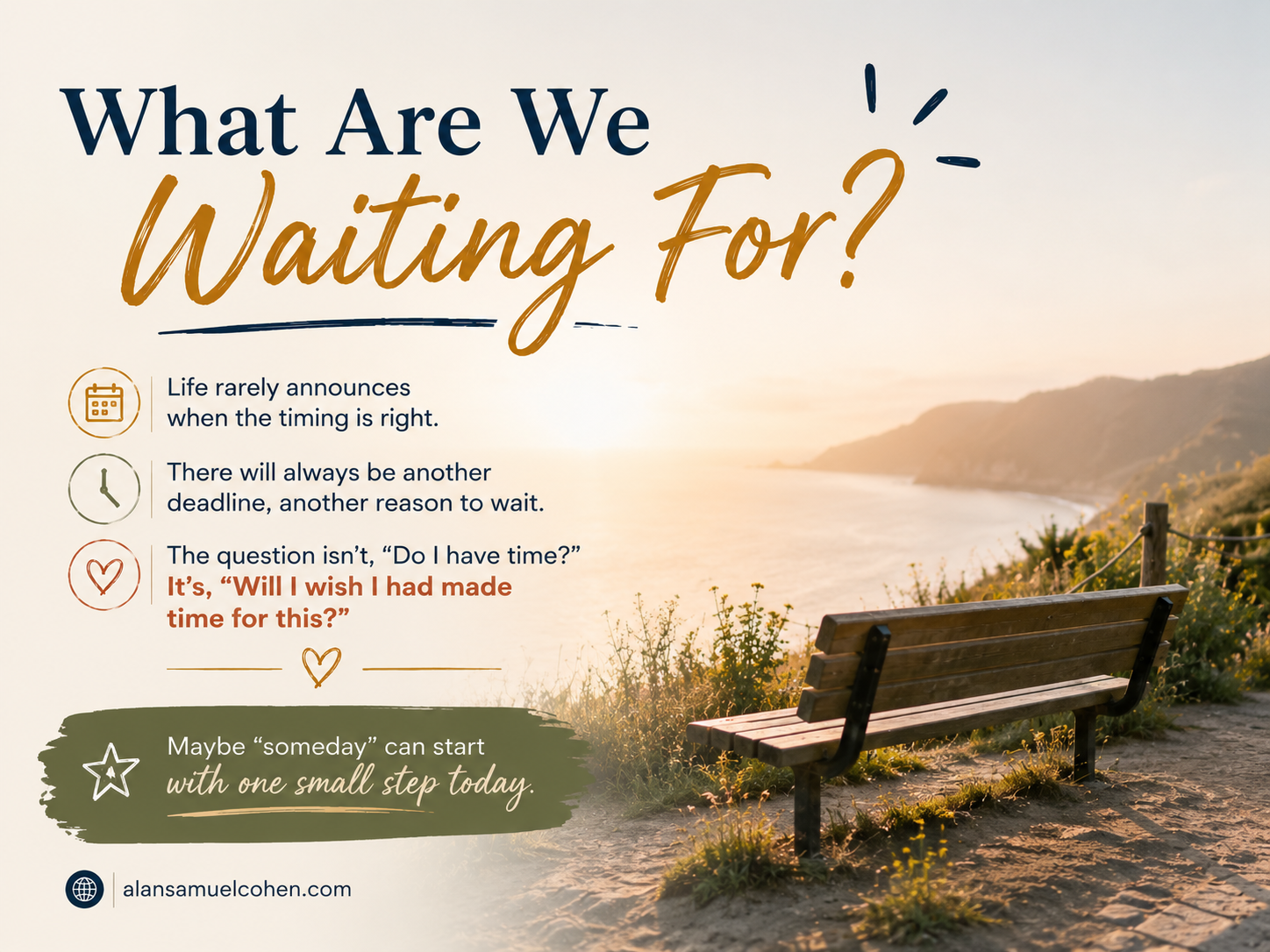
How many times have we said, "Someday"?
Someday I'll take that trip.
Someday I'll learn something new.
Someday I'll spend more time with the people I care about.
Someday I'll finally do that thing I've always wanted to try.
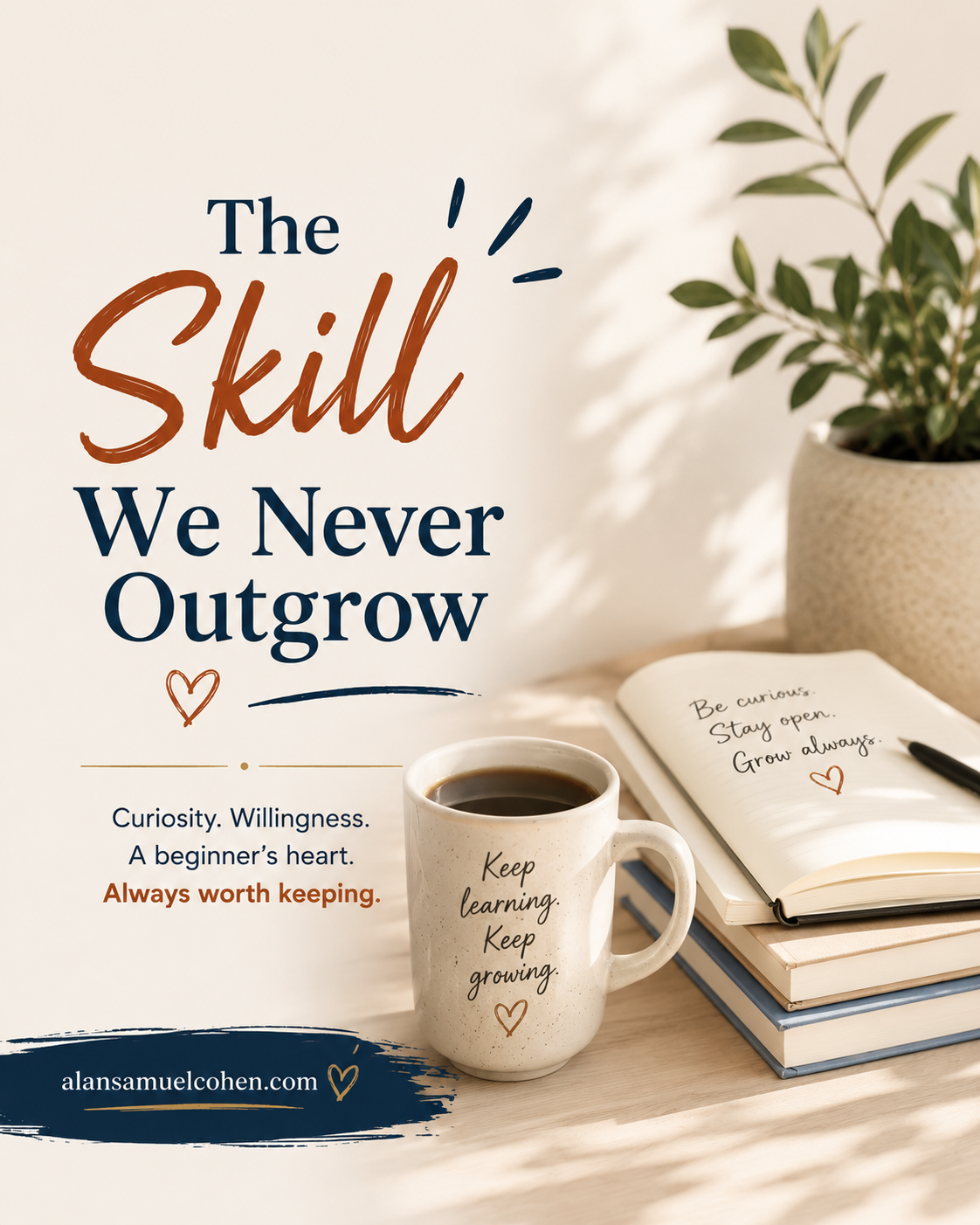
There is one skill that becomes more important the longer we live and work.
The ability to learn.
Most of us enjoy being good at what we do.
There's a certain confidence that comes from experience. We know what to expect. We know how to solve problems. We know how to succeed.
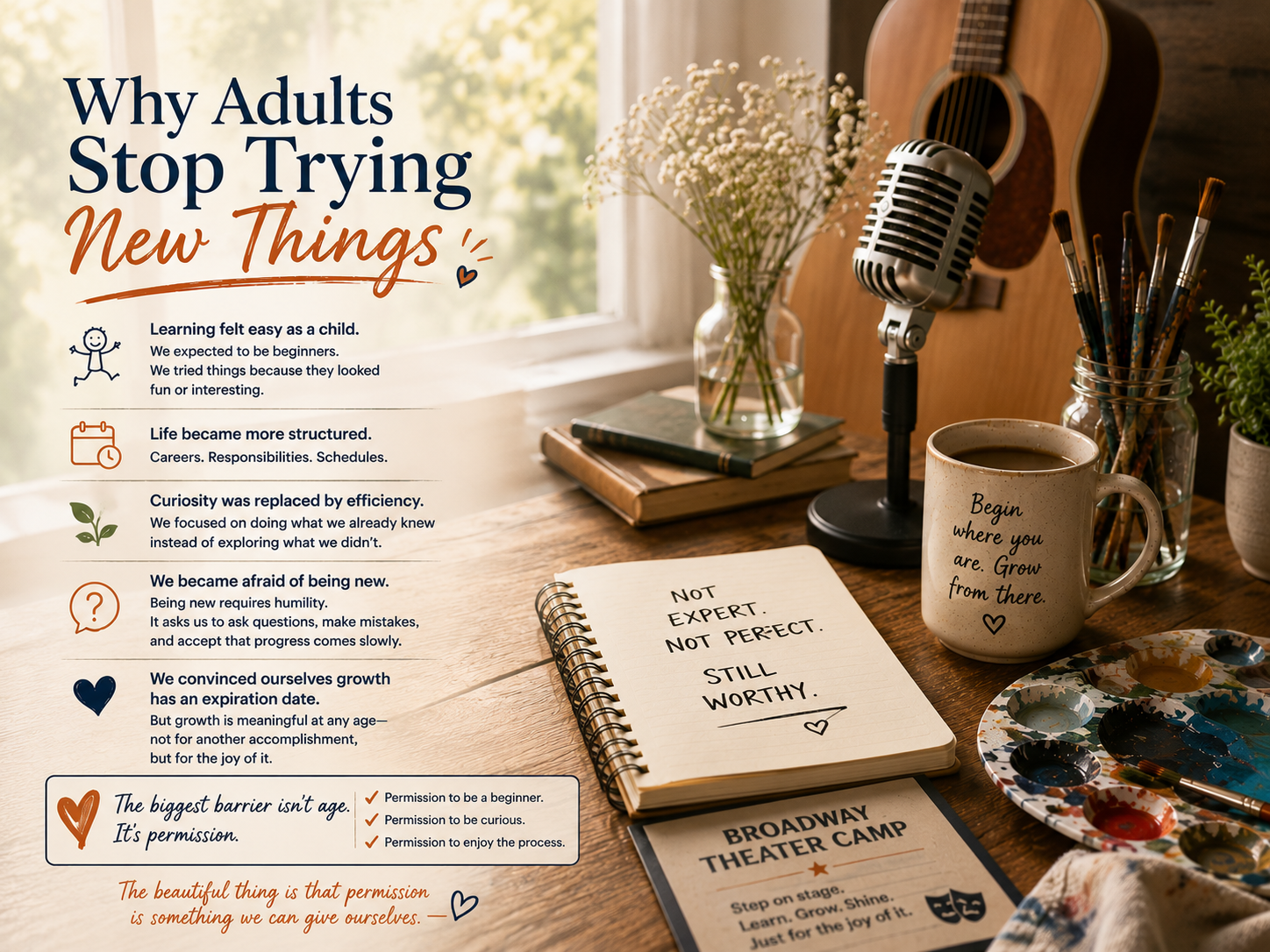
When we were children, play didn't need a purpose.
We built things because it was fun.
We sang because we felt like it.
We colored outside the lines and didn't worry about whether anyone would approve.
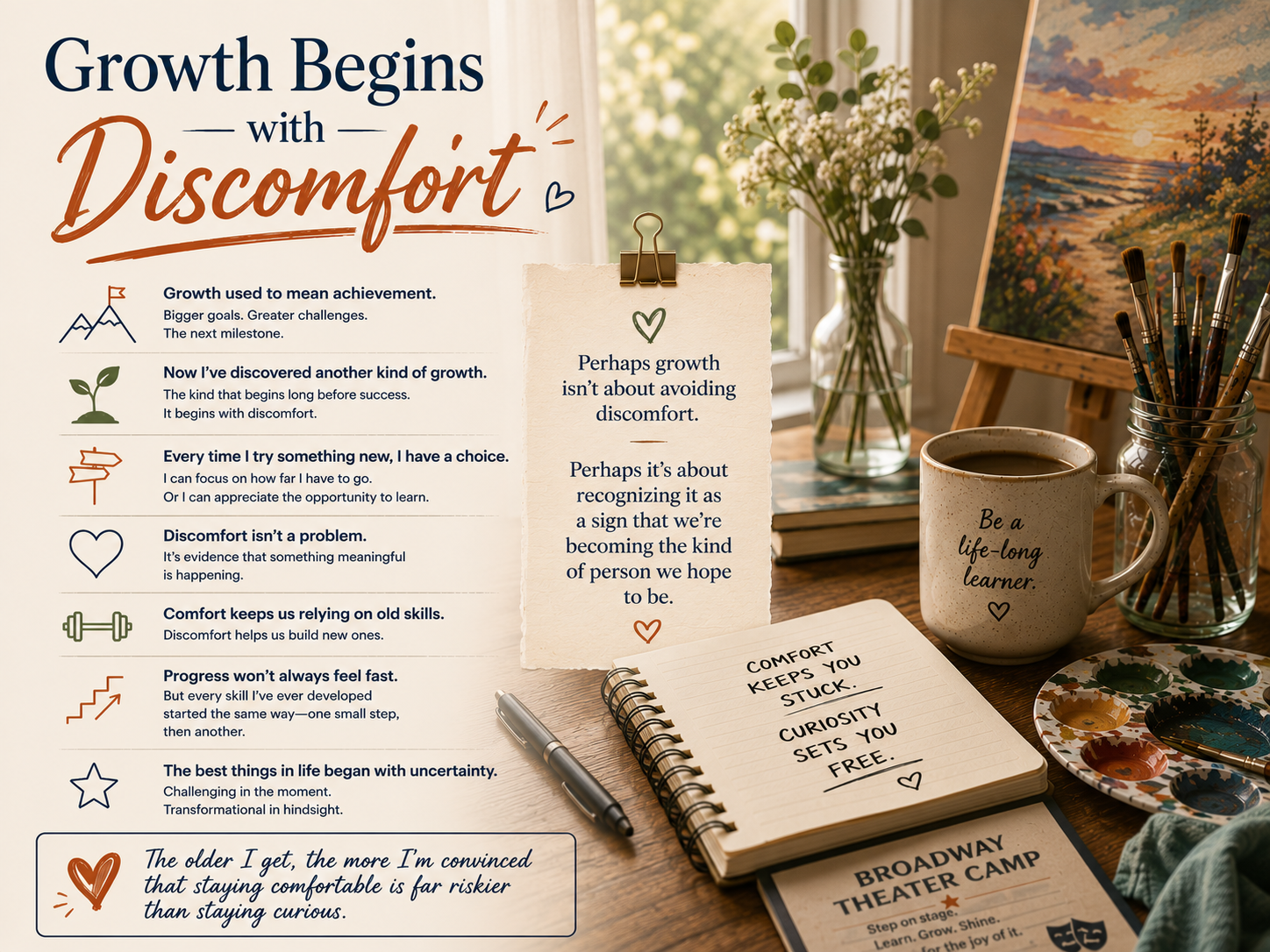
For much of my career, I associated growth with achievement.
Setting bigger goals.
Taking on greater challenges.
Reaching the next milestone.
Think about the last time you tried something for the very first time.
Not something related to work.
Not something you had to do.
Something completely new.
One of the surprising things about getting older is that we become very good at protecting our competence.
We spend years building knowledge, developing expertise, and earning the confidence that comes with experience.
When we hear the word "creative," most of us picture artists, musicians, actors, or writers.
We rarely picture ourselves.
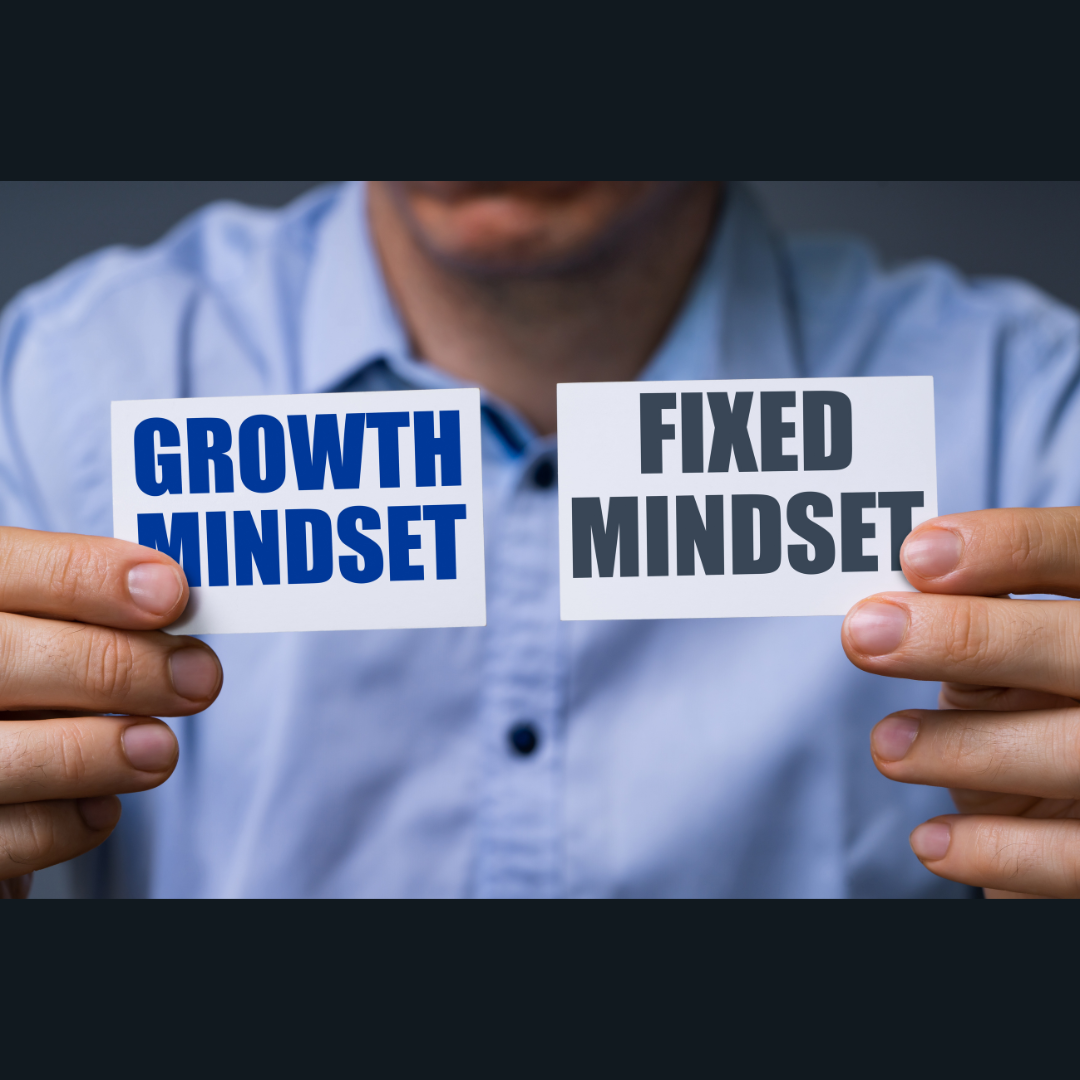
We often think of a growth mindset as something that helps us succeed professionally.
Work harder.
Learn faster.
Improve your skills.
Achieve bigger goals.
Data is essential.
It helps us make decisions, identify patterns, and evaluate results.
But when it comes to building trust, data has limitations.
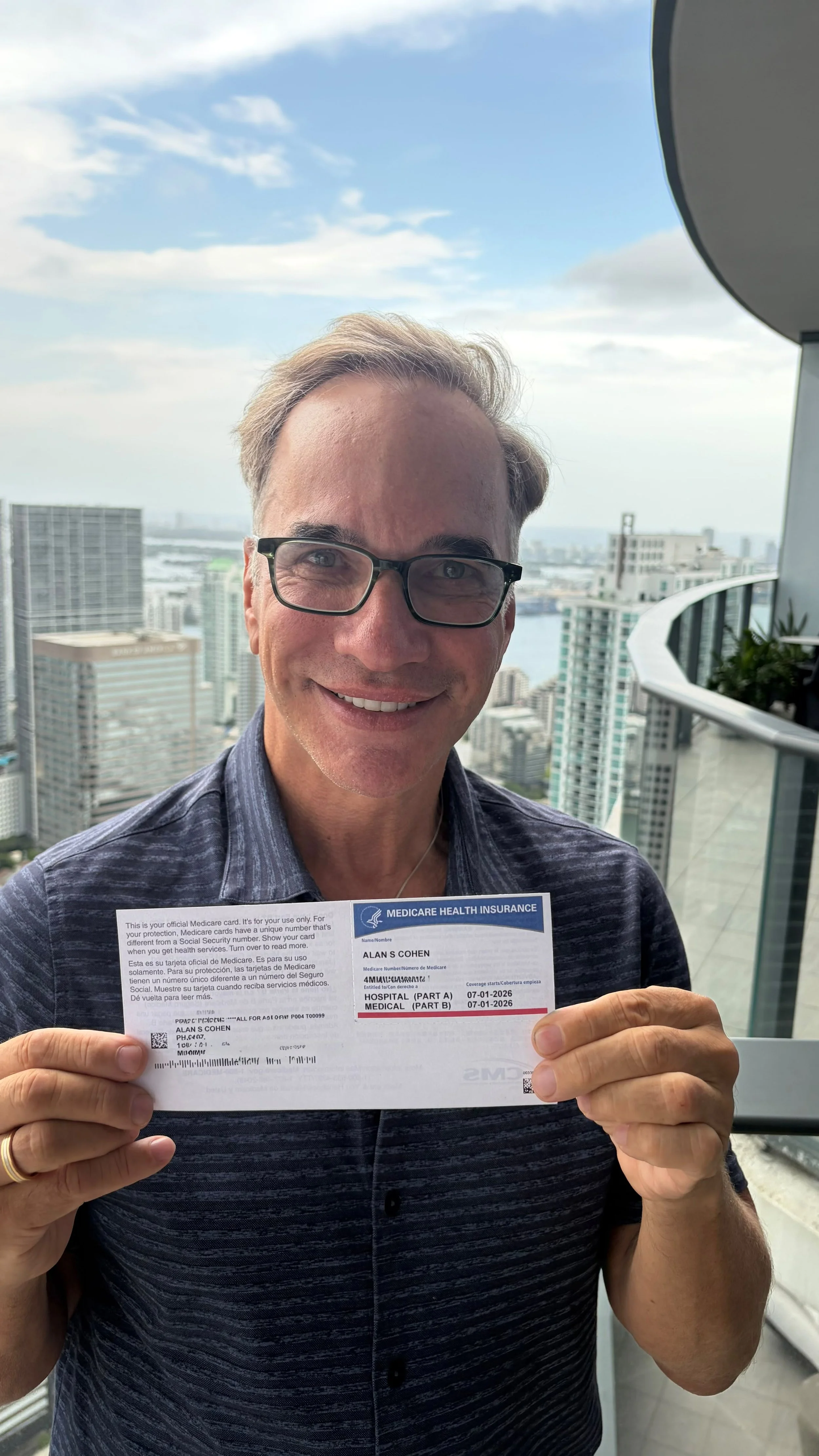
Last week, I turned 65.
Birthdays have a way of making you pause and take inventory.
For most of my career, I measured progress by the next client, the next keynote, the next opportunity, the next accomplishment. There was always another mountain to climb.
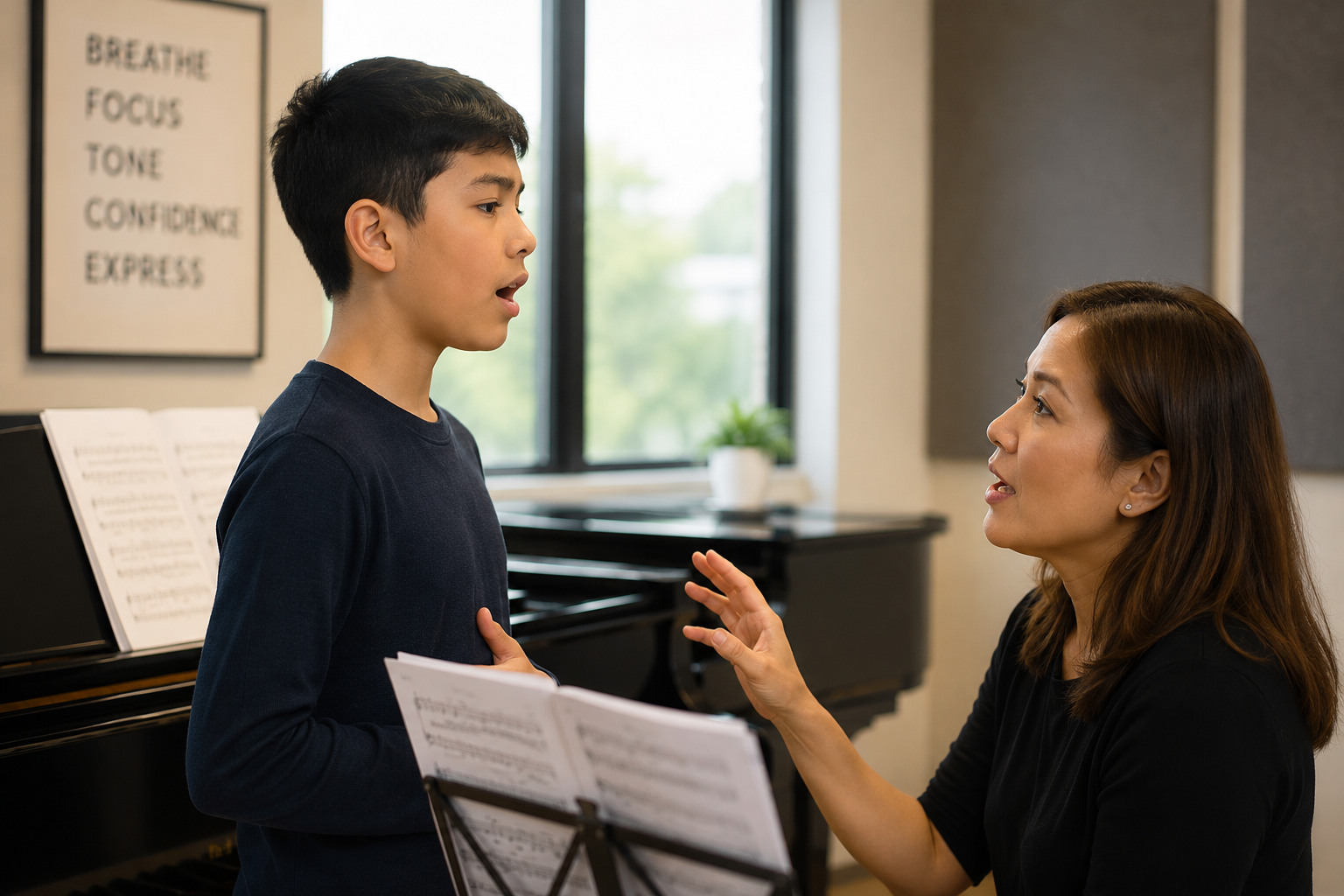
I've spent much of my career helping others find their voice. I thought voice lessons would help me find my own... but they have given me that and so much more.
Lately I've been thinking about something that doesn't get talked about very much.
What happens when life gets... quieter?
Most people don't dislike networking.
They dislike what networking has become.
For many professionals, networking feels transactional. Conversations are driven by agendas, opportunities, and outcomes rather than genuine curiosity.
When leaders ask why employees aren't speaking up, they often assume the problem is confidence.
People need to be more assertive.
More proactive.
More willing to share their ideas.
Most leaders understand that people want to feel like they belong.
What often gets overlooked is something more subtle: uncertainty about belonging.
Not knowing where you stand.
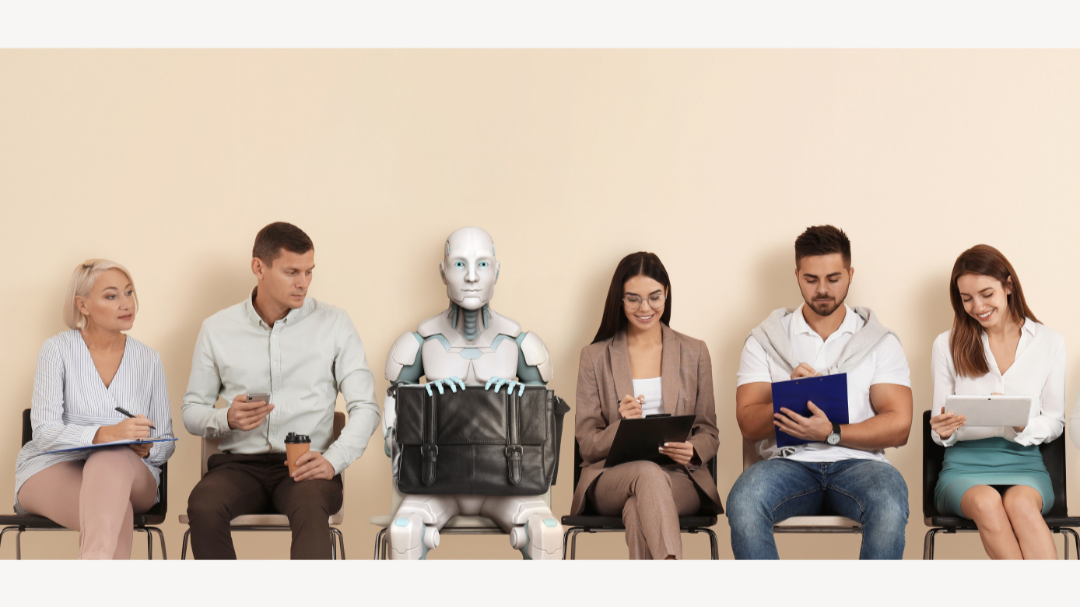
Artificial intelligence is changing the way we work.
It can write emails, summarize meetings, generate content, analyze data, and answer questions in seconds. Tasks that once took hours can now be completed in minutes.
Walk into almost any organization struggling with trust, engagement, or collaboration, and you'll hear a familiar explanation.
People need better communication skills.
When I joined the Board of Guitars Over Guns, I did it because I believed I had something to contribute.
Most speakers believe getting booked is mainly about talent.
It’s not.
Talent absolutely matters. A powerful message matters. Strong delivery matters.
But in today’s speaking landscape, those things alone are rarely enough.
There’s a particular kind of smiley face that has absolutely nothing to do with warmth.
You know the one
The feeling of jealousy sucks - I put it right up there with resentment. Emotions that we push down or ignore, rather than understand what is at the core.
But what’s worse than jealousy is how quietly it changes our behavior. It is insidious. We don’t talk about that part.
If you’re an event planner, or have ever planned even one event, you probably know this feeling…
You’ve done everything right. The venue works, the schedule is tight, the speakers are good. And still… the room feels a little flat. And it isn't just the post lunch drowsiness.
People are there. They’re listening. But they’re not really in it.
We all carry stories about ourselves.
"I'm not creative."
"I'm too old to start something new."
"I've never been the artistic type."
"That's just not who I am."